


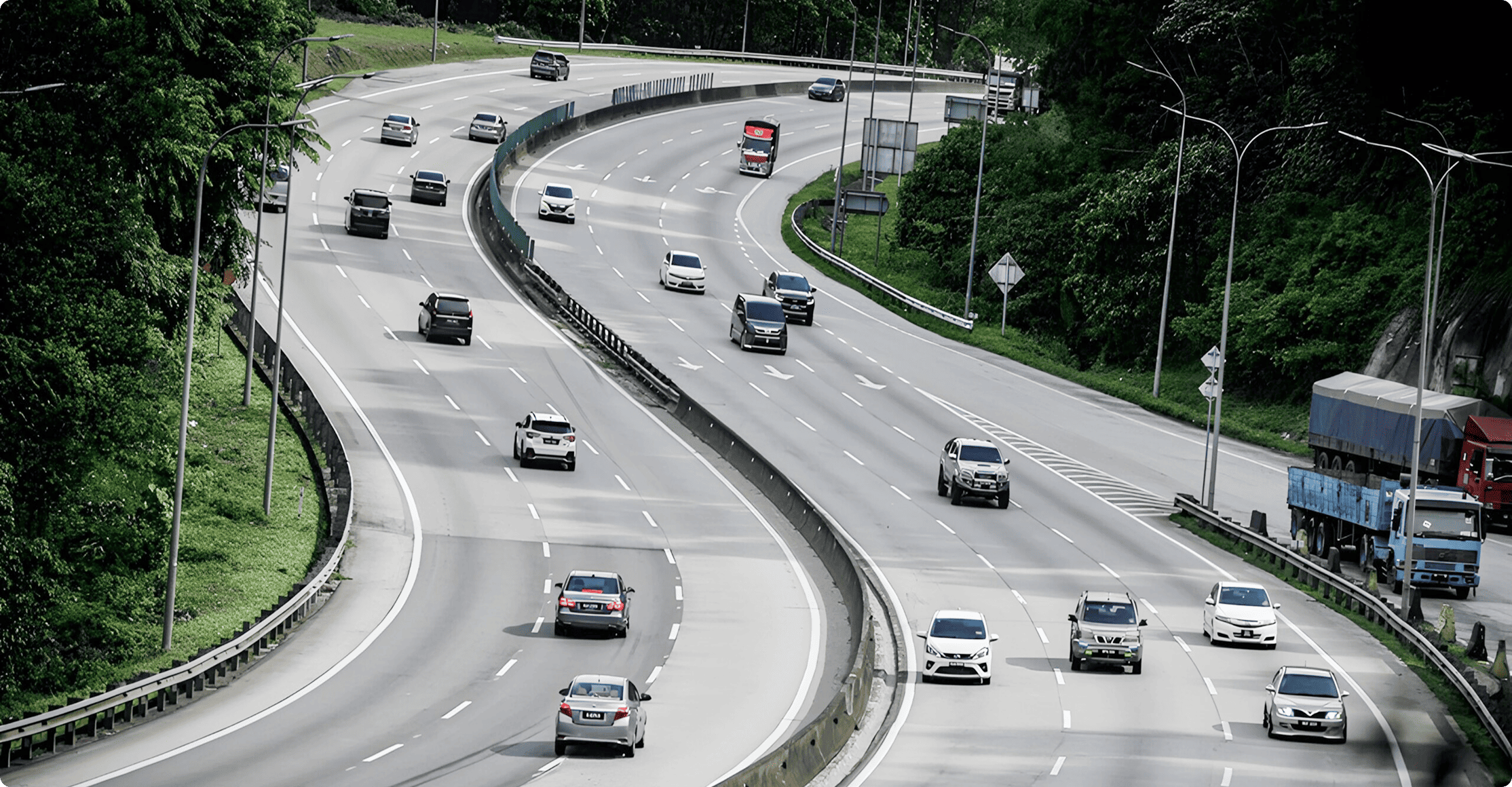
As part of the movement towards modernizing Malaysia's toll system, TERAS has worked with highway concessionaires on innovative solutions that aimed for reducing congestion and improving toll collection experience. TERAS want to explore and enhance the Toll Collection System (TCS) by adopting ANPR and Open Payment as proposed solution build to achieve fast, secured, and scalable transaction process as to facilitate for a better user experience e.g. frictionless to reduce congestion at toll lane. This solution will also adopt Open Payment, which has been proven feasible and with support from the authorities i.e. Malaysia Highway Authority (MHA) and Ministry of Work (MOW). The ANPR OPEN PAYMENT is also intended to demonstrate a feasible transition towards Multi-Lane Fast Flow (MLFF).
Traditional toll collection methods contribute to road congestion and cause a worsening experience for users on the road due to its stop-and-start nature. The implementation of RFID toll collection method helped to ease some of the congestion drivers can pass through without stopping their vehicles. However, for drivers entering via non-RFID lanes and exiting via RFID lanes, their experience would be worsened if they were penalized.
In collaboration with PLUS Malaysia, TERAS has implemented our in-house ANPR engine to support alternative payment methods and auto-match entry and exit information starting with a pilot at the Hutan Kampung-Sungai Dua stretch. By implementing our ANPR engine at both entry and exit lanes, our system able to find the vehicle's entry information based on the plate number captured from all plazas and auto-match it to the vehicle's exit information to charge the driver the correct fare. This provides flexibility to the driver to enter any lane as long as they exit via the RFID lane. The auto-match and validation process runs in the background which allows the driver to pass through the exit first, which then reduces congestion. If the system is unable to automatically find the entry information of the vehicle, it will retrieve images of the closest matches and send it to our Validation Centre to be manually validated.
ANPR Detection: 99%, ANPR Accuracy: > 95% is the acceptance criteria as guided by APST, MHA, NEI Identification: Automated, Post-Exit Validation: Implemented, Fair Charging Decision: Achieved.